




Dr. Fatma Kamiloğlu
ORCID: 0000-0001-5319-8290
Araştırma Makalesi
Kaynak:
Kamiloğlu, F. Yurttaş Uluğ, Ö. (2015). A Field Research on the Brand Perception of Internet and Social Media Application, Europen Conference on Social and Behavioral Sciences, Izmir, Turkey, 5-7 February 2015.

Summery
To create a brand and brand equity has turned into an extremely significant competition among foundations. The brand equity that is analysed both on the financial gounds and the consumer basis consists of the total values identified with the brand itself. Today social media, under the usage of great many users, is becoming one of the root elements for marketing strategies of brands. A lot of brands carry out operations tending to create long term trends through social media which has the overwhelming power of global communication. The purpose of this work is to put forth the place of social media being a brand within itself and social media applications over the perception of young people. Among the service brands, with over billions of users, social media and its applications have become “a brand” within itself as well.
In this research prepared to determine the brand equity of social media, the brand equity has been evaluated cognitively following a field survey applied on high school students in Istanbul/Turkey (n:1498), which was evaluated putting its basis on root ingredients such as how known the brand is, how liked it is, how dependable it is found, how pleased its users are, how much it is recommended. Brand equity models of Aaker, Keller, Milward Brown Research Company, GfK Research Company and Xsight Research Company’s has been taken as the basis for brand equity determination for creating a model of the brand value/equity.
Key Words: Social media, branding, brand equity, brand value, high school students
1. INTRODUCTION
Along with the marketing conditions enjoying brand battle fields, not every brand would get the targeted success resulting in not creating the desired effect in the consumers’ eyes. A powerful brand has high brand equity. Brand equity is the positive differential effect that knowing the brand name has on customer response to the product or servise. (Amstrong&Kotler, 2009: 211) Creating a powerful brand and making that brand valuable both financially and costumerwise is one of the upper most values that foundations might get in today’s world of cracking competition. What lies beneath these careful brand planning management strategies is but a mere target to create a valuable brand. The thing that makes a brand valuable for customers is a brand that is bought by customers, a mixture that creates satisfaction and a sentimental relationship as well as physical characteristics, and that has a personality, which is to say it is a brand that’s built. (Borça, Karpat, Aktuğlu, 2004:39). In order to shape up the brand equity, the communication between the customer and the brand should be focused on observingly. One of the most significant contemporary communication tools, the Internet and its current social structure; Social Media has a tremendous effect on customers in order to create powerful relationship betweem the brand and customers. Another very significant point to be focused on is to analyse the brand equity of these applications. In this study, main approach depends on analyzing the brand equity of these applications that contribute to increase the brand equity of foundations.
2. BRAND EQUITY AND BRAND VALUE APPROACHES
Brand is a term that expresses on qualitative peculiarities that differentiate and separate a product or service from others. It is also defined as names, symbols, designs and their various combinations that those who offer their products or services to the market use in order to show their difference from others in the market (American Marketing Ass., http://www.marketingpower.com/_layouts/Dictionary.aspx?dLetter=B Research date: 09.10.2013). Taking it from this point of view, the basic point of having/using a brand is to avoid from being simple or ordinary. Similarly, Aaker (2009:25) defines brand as a name and or symbol that differentiates or determines some goods or services of either one or a group of vendors from their competitors.
Baudrillard, states that brands lead consumers to a group of more complicated choices (Boudrillard, 2008:18). However, as Baudrillard also mentions in his definition, brands not only create a limited relationship in meeting the consumers’ needs for the usage of product/service, but also they shape with a structure that meets the expectation, addresses the personal specifications and pleasures, and makes individuals have different experiences as well. Taking the definitions above into consideration, we can express that there is an effort to build up realtionships in various dimensions between brand and customes. In marketing literature, the attempt to define the relationship between brand and customer created the concept of brand value (Wood, 2000:662). Brand Equity is “a set of assets and liabilities linked to a brand, its name and symbol that adds to or subtracts from the value provided by a product or service to a firm and/or to that firm’s customers” Aaker (1991). According to Kotler and Armstrong (2004: 291), the value of a strong brand refers to how strong it is to meet the customers’ needs along with the customers’ loyalty. In general meaning, when the studies concerning brand value are analysed one can see different approaches on the way to define its concept and conceptual meaning. Comprehending the brand value can be approached in various ways according to the businesses’ different functions, and it also varies according to targets (Keller, 1993:4). This difference in general, as Lassar vd. (1995:12) mentions, is based on two different perpective: It is analysed financially and consumer base. Kim vd. (2003:337), on the other hand, mentions that a third (a mixture of both approaches) approach might as well be observed. While financial approach emphasizes the monetary value of a brand, according to Pelsmacker vd the real value of a brand also involves the financial market value of the brand’s identity value, the profit it is likely to make in a particular period of time, and -in case it enjoys- the financial credibility of its instruments that exist in the stock and shares range (2001:45). While it is possible to determine the measurments and/or methods to evaluate the financial value of brand clearly, the second approach, which is called the consumer based or customer focusing approach, exhibits an ambigious and unclear structure when compared with the financial approach.
However when the basics are analysed the brand equity that the consumer based approach concerns is also a precession point as in financial profits. When one examines the studies concerning the consumer based brand value determining approach, s/he will definitely find out that consumer based brand value consists of 4 elements (brand awareness/popularity, brand loyalty, brand association, the quality perception). (Toksarı and Inal, 2013:1427). Aaker (2009:46-48) mentions that the brand value can be determined through brand loyalty, brand credibility, perceived quality of the brand, brand associations and connections with other brands. These objects obtain various profits and value as well (Leone, Keller vd. 2006:126).
Keller defines the brand value as different effect, which is totally different form the brand information, and in which the consumer originated brand value is based on the reactions of consumers towards a brand’s marketing activities and programs. Accordinly, the brand information depend on all the thoughts, feelings, perceptions and experinces but it is not necessarily the reality of that particular brand (Leone, Keller vd. 2006:126). Therefor it is essential that a serial attempt be made to improve and protect the ingredients of the brand (Karpat Aktuğlu, 2004:40). Keller also mentions that consumer based brand value can be created by planning these differences taking brand strategies and differences of consumers attitude into consideration (Keller, 2003:694). Consumer based brand value is realized when the consumer approaches the brand and forms up a unique and strong brand perception (Keller, 1993:2).
Ad agency Young&Rubicam’s Brand Asset Valuator measure brand strength along four consumer perception dimensions: differentiation (what makes the brand stand out), relevance (how consumers feel it meets their needs), knowledge (how much consumers know about the brand), and esteem (how highly consumers regard and re-spect the brand). Brands with strong brand equity rate high on all of these dimensions. (Amstrong&Kotler, 2009: 211)
Graphic 1 – Customer Based Brand Equity Pyramid

Source: Keller (2001) Model Customer-Based Brand Equity (CBBE) Pyramid
Brand Sailence – Relates to how often and easily the brand is thought about under various purchase or consumption situations Brand Performance – How the product or service meets customers’ functional needs Brand Imagery – Deals with extrinsic properties product/ service including the ways in which the brand attempts to meet customers psychological and or social needs Brand Judgements – Focus on customers’ own personal opinions and evaluations Brand Feelings – Customers emotional responses and reactions with respect to the brand Brand Resonance – The nature of the relationship that customers have with the brand and the extent to which customers feel that they are ‘in sync’ with the brand (https://avaremy.wordpress.com/2013/11/09/brand-equity)
On the way to measure the perceived value of brands, various methods are utilized. In this field most effective measurmements are compiled by Millward Brown Research Company, GfK Research Company and XSights Research Company. These three research companies, while measuring the perceived value of brands on customer basis worldwide regularly, make use of various criteira as well as similar ones. However on every measurement basis as well as the rational and sentimental perceivement of the target mass, the limits of buying and recommending the brands are also gauged.
Graphic 2 – Millward Brown Brand Equity Model

Source: Millward Brown Research Company, Brand Equity Model, http://www.millwardbrown.com/solutions/slick-sheets/millwardbrown_branddynamics.aspx
Presence: Active familiarity based on past trial, saliency or knowledge of brand promise (Do I know about it?) Relevance: Relevant to consumer’s needs, in the right price range or in consideration set (Does it offer me something) Performance: Felt to deliver acceptable product performance and is on the consumer’s short-list (Can it deliver) Advantage: Felt to have an emotional or rational advantage over other brands in the category (Does it offer something better than others?) Bonding: Rational and emotional attachments to the brand to the exclusion of most other brands (Nothing else beats it) (https://avaremy.wordpress.com/2013/11/09/brand-equity)
Graphic 3 – Hierarchy of Brand Value Measurement Relationships -GfK

Source: GfK Research Company, Brand Potential Index Model, http://marketing.gfkamerica.com/102011-1252/GfK_Brand_Vitality_Tracking_Slip_Sheet_May_2011.pdf
GfK Research Company makes use of the chart above on gauging brand equity value measurement. In this chart brand value is gauged in 3 main component: Rational, Sentimental and Operational limits. Each main topic enjoys sub-components. The achievement value in these components of consumer perceivement is questioned.
Graphic 4 – Hierarchy of Brand Value Measurement Relationships

Source: Xsights Research Company, ‘Perception Modeli, X-Percept’, www.itibaratolyesi.com/…/Turkiye_Itibar_Endeksi_Cigdem_Penn.pptx, 20013.
Xsights Research Company makes use of triangle brand value gouging in brand equity measurement. In this triangle what performance these brands have in consumer perception is gauged. The least affecting point of the brand value is the bottom part and the most value increasing point is the top. As you take the steps gradually towards the top, only strong brands grow can proceed increasing their rates. The questioned topis in this traingle are: Recognition (Knowing the brand, the name of the brand, seeing the news of the brand), liking (liking the brand, thinking high about the brand, liking the PR and the commercials of the brand), trust (trusting the brand, trusting the products and the services of the brand, trusting the promises of the brand and trusting the texts and messages of the brand), relation (prefering the brand, buying, using and wish to buy it in future if not now), contentment (the satisfaction of the brand, the satisfaction of the products and the services of the brand), loyalty (the loyalty fort he brand, wishing to buy the products and the services of the brand), delegate (recommending the brand to others, talking high about the brand to others, letting others know about the brand), faithful (recommending the the brand even when it is not mentioned in the atmosphere, carrying on using the brand, lovers of the brand).
2.1. Internet and Social Media in Brand Equity Context
Brands are not static; they have many facets to their personality. In order to build up and retain equity as a preferred brand in the mind of the customer. (Gobe, 2001:185) In the duration of brand and consumer relations, social media’s structure of being able to present different experiences and opportunities, and its popular and widespread usage obtain almost unlimited break for elusion from competition and being in the foreground. Therefore social media has become a very profitable field for advertisement companies, ad-users and for brands.
As a communication channel, social media has created significant brands for foundations, advertisements and ad-users. When social media is mentioned it has become a reminder of a vast internet structure called Web 2.0 that provides an interactive communication. In the base of Internet and Web 2.0 social media involves a vast amount of applications such as blogs, social webs, video share sites and RSS s. According to Kaplan and Haenlein’s statement social media that obtains a global communication for its users, is the body of internet based applications that are built on ideological and technological basis and that allow its contents to be produced, improved and developed upon users’ base (2010:61).
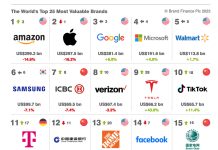
Provided that social media is taken into consideration from brand communication point of view it might as well provide a platform that improves and manages customer relationships, contributes to brand purchasing decisions, spreads sincere and correct info to the customers, informs the potential customers and the sector about what’s trendy in the market what bias the market enjoys most recently, disciplines brands and provides a dialogue between brand and costumers (Kahraman, 2010:85-86). However social media and internet applications do not only enjoy the task of carrying the relationship between brand and customer, but also it enjoys a product/service speciality. (Scott, 2013) With approximately billions of users social media has gradually become a brand itself and for this reason it has become essential that it take its own brand equity and evaluation into consideration as well. The research “100 Most Valuable Brand of The Globe” done by International Brand Evaluation Corporation revals the market value of gigantic brands. According to the 2013 results, Google is in the second and Facebook is an the 52nd (http://www.interbrand.com/en/news-room/press-releases/2013-09-30-d355afc.aspx 1 OCT 2013). As a result it is vital that these brands that gain financial significance be approached from brand equity point of view.
3. RESEARCH
Research section involves the target of the research, exemplification and methodology, and research along with the data analysis.
3.1. Target of the research
With its significant communicative value, social media enjoys a very effective rol on especially youngsters. It has the value of a field that shapes the youngsters’ life environment and point of view along with its communication providing facility. For this reason it is vital that social media communication and its renewing/reshaping structure be analyzed deeply. The better this new media that has gotten formed against conventional media is analyzed the better effective and gainful communicative activities can be formed. Within this data the target of the research is to create a general point of view determining the value of social media as a brand for high school students in some basic fields such as knowing the brand closely (how big the brand is), appreciation of the brand (dynamism), pleasure of the brand, how dependable the brand is and how advisable the brand is. In addition we attempted to make a comparison between brands analyzing social media and its applications mutually.
3.2. Method of the research
In gauging brand equity of social media and its applications, all the models above are analysed. The basis of brand equity determination is the hierarchy of relationships. The graphic above involves the headlines that Aaker (1993), Keller (2001), Milward Brown Research Company, GfK Reseacrh Company and Xsight Research Company take as the basis for brand equity determination. Taking these models as basis, a model gauging the brand equity more elementarily and in a more result focusing way in five components has been advanced. These components: Knowing the brand closely, liking the brand, being satisfied about the brand, trusting the brand, delegating for the brand voluntarily and recommending it to the others.
Although some basic criteria was taken into consideration, the association of brand in mass perception and brand loyalty might as well be interrogated qualitatively in addition to the headlines presented above. Besides features like concrete existence and inventory analysis of the brand were done also in brand equity calculations. Basic headlines were taken into consideration in this research. 5 headlines were measured in order to comperehend the perceptional brand equity, which was aimed not to take too much of young people’s time. According to these models, the contribution effect of each component on the brand is different. The highest effect is the effect of delegating the brand voluntarily. Right next to it comes the trust for the brand. The medium effective component is satisfying about the brand. Less effective component is liking the brand and the least effective is knowing the brand closely. Taking this into consideration the top contributing components have greater importance for gauging the brand equity. Besides, knowing, liking, satisfaction and recommendation of the brand are essential to make the brand a star brand.
Graphic 5 – Our Combination Hierarchy of Brand Equity Measurement Relationships
As it can be seen in this graphic, the duration that started with the recognition, the size as it were, of the brand carries on along with liking, the dynamism of the brand and with how happy people are about the brand. Through to the top of the hierarchy is there the trust in the brand, and on the top is the delegation of target people, which means those who represent the brand voluntarily. Those brands which are ideal target to improve and develop the top parts in this hierarchy. The more these areas develop the more the perceivable value of the brand gets.
3.3. The exemplification and methodology of the research
The environment of the research consists of high school students in Turkey. According to Turkish Statistical Corporation, Istanbul is the best representative city in Turkey with its cosmopolitan structure and %18,2 of the whole population (13.624.240 persons). Prior to the application of the research the project proposal and the questionnaire is presented to the Ministry of Education of Istanbul and the application of the research is realized after getting the permission from Governorship and the Ministry of Education of Istanbul. Thus in order to reach the target mentioned above an effective and correct method “Quantitative Research” method and “Coincidental Exemplification” method have been used. When applying these methods it has been depended upon the prepared questionnaire with the “Fill it in yourself” technique. Exemplification is determined by “Simple Coincidental Exemplification” method. According to the info provided from Ministry of Education of Istanbul there are 853 high schools with the average of 500 thousand students. First a list of all the high schools in the city of Istanbul is formed. Within this list “Systematic Coincidental Exemplification Method” is used to determine the high schools to make the application. In order to reflect the high school structure in Istanbul 11 high school (7 Public School and 4 Private School) has been chosen. For each school (High School level 1= 50 questionaire, High School level 2= 50 questioanire and High school level 3= 50 questionaire) has 150 questionaire application all told, which reached to 1650 students who answered the questionnaire all told. According to this the exemplification or the research has 95% reliance with a + – 0, 02 failure rate, and it is 1650 in 500 thousand system. During the analysis of the research those questionaires with mistakes and deficiency have been left out, and the statistical data has been done over 1498 questionaire. In these chosen high schools the questionaires were handed out to the level 1, 2, 3 students in the last 10 minutes of the class in order not to disturb the lesson accompanied bey their teachers. Students filled in/ansered their questionnaire forms with “filling in by themselves method”. They were chosen with “Simple Coincidental Exemplification” method. Those who attended that day in that hour made up the exemplification and thus the field study of the research was completed in March 2013.
3.4. Research Data
Of the high school level 1, 2, 3 students, 43% of the students that participated in the research is female students, and 56, 9% is male students. The range of the high schools is like below: Public High School 12, 6%, Vocational High School 25, 5%, Anatolian (Lnaguage Based) High Schools 28, 9%, High School of Fine Arts 8, 2%, Private High School/College 24,6%. Age range of the students: ages between 15 and 16 is 63, 6%, between 17 and 18 is 32, 9% and others is 3, 4%.
Graphic 6 – Trust in Foundations and Internet

During the research before evaluating brand equity of social media, main target was to determine how much trust high school students direct to foundations and the place of Internet in this trust. The data indicates that in the credibility analysis high school students trust army most with 71, 3%. Following this is 60,4% police, 60,1% Presidency, 58,8% Turkish Grand National Assembly, 58,5% Prime Ministry, 57,5% Inernet. Internet is in the 6th place among others, which indicates that Internet has a significant role on younsters. The least trusted foundations are Political Parties and Media. For this reason it would not be wrong to say that traditional media does not create reliability or interest among younsters any more because traditioanal media has lost its credibility compare to new media, and according to this opinion it would be correct to say that youngsters tend to use new media environments more often.
Graphic 7 – Close recognition of Internet and Social Media Applications

During the research high school students were asked how close they know the appliations below, how much information they have about the applications, how they get the info about them; from media or close relationships, how they get the info about the recent news and changes for the applications. Very first component of the value of a brand is its awareness. According to the young people’s “I deffinitely now” and “I know” answers the “know” rate distribution is as: Facebook (80.8%) and Google (79.5%), which is followed by Youtube 73.4% and Hotmail 72.7%. Among others Twitter has a 59.8% rate for young students. So it might as well be said that inspite of its increasing users in recent years Twitter is not yet to be popular by high school students. In addition to this betwwen the two competing mail sites Hotmail and Yahoo, Hotmail is more popular among young people. In case we take the popularity as the size of the site, for young people Google and Facebook are the biggest in their cathegory.
Graphic 8 – The liking/admiration of Internet and Social Media Applications

During the research another question asked was how much these applications are liked. In the perceptional value of a brand it is important how much that brand is liked as well, because it indicates how shiny its star is and how much it is known among its followers, which means how dynamic the brand is. In this question the most liked application is Google with 80, 5% rate. Others are Youtube 73,8%, Facebook 62,6% Hotmail 59,9% and Twitter 48,4%. In the perceptional value of a brand it is more important that the brand is liked rather than it is known. For brands to be more liked is much more important than to be more known. Brands with less known value but with higher liked value are those with more portantial to grow higher and with a more shining star. The main determiner in brand equity is that the liking and recognition values should be either equal or the liking value should be higher. Those brands with a higher recognition but with a less liking value
Graphic 9-Recognition and Liking Analysis

As it can be seen in the chart above when you take the average value as the basis on the top right hand side of the chart Google, Youtube, Facebook and Hotmail can be cathegorized as “Big Brands” because the liking and recognition value of these brands is above the avarage value (50%). The significant point is that Google and Youtube are liked as much as they are known. It is something healthy for these brands. These two brands continue to grow as well as to be liked so they are perceived as dynamic brands in young people’s aprehension. On the contrary Facebook and Hotmail have less liking value compared to their recognition value, which actually means that they are losing their dynamism, and they are getting clumsy. Especially in spite of 80% recognition value, Facebook has 62% liking value, which means it is on the way to get slow down and lose its brightness. If this situation continues and the difference grows bigger they have probability to get a place on the bottom right hand side of the chart. This part of the chart involves those having high recognition value with a low liking value. Another important data is that Twitter is not an effective brand among yourng people. Yahoo is somewhere (center of the chart) in between. Future communication activities might locate Twitter into a position in this chart. The important thing that it should increase its liking value.
Graphic 10 – Trust in Internet and Social Media Applications

In brand equity measurement the recognition and liking rates are usuall high. Besides, trust and reliability, and advice rates are lower compare to the other values. However, the significant thing is that those brands which are considered “big” have very little or no difference between rates. When we consider how much social media creates reliability in young people’s perception according to the total of “I trust” and “I deffinitely trust” answers the most trusted media is Google with its 60% rate.
Following “trust” rates are Youtube 46,9%, Hotmail 45,8%, Facebook 32,8%, Twitter 31,7% and Yahoo 16,1%. As a result Google is perceived as the leader brand by youn people.
Grafik 11 – How happy the users are about Internet and Social Media Applications

Another component determining brand equity is the level of happiness that’s reflected for the brand. According to total rate of “I’m extremely happy” and “I’m happy” answers that young people answered, they like Google most by the rate of 78,6%, which is followed by Youtube by 71% and Facebook by 62,6%, and Twitter 45,7%, Yahoo 20,2%.
Graphic 12 – How recommendable Internet and Social Media Applications are

The brand equity of the triangle, the most powerful space increase brand equity, is to recommend the brand.
In determining the brand equity along with brand recognition, liking of the brand, trust in that brand, happiness for the brand usage, the recommendation of the brand has one step further significance. For the target group to advise brand means, different from basic customers, that those people are voluntary delegates, which indicates how much that brand is loved. For this reason during the research how much the brand is recommended is also questioned. According to the total “I deffinitely recommend” and “I recommend” rates Google has 67,8% rate. Following recommendation rates are; Youtube 59%, Hotmail 49,1%, Twitter 38,2%, Facebook 46,4% and Yahoo 14,4%. It wouldn’t be wrong to say that Hotmail has a safer place than Yahoo anong younsters. Similarly Facebook is perceğved better that Twitter by younger people. Generally the best place is for Google which is followed by Youtube.
3.5. Hierarchy of Brand equity Measurement Relationship of Internet and Social Media
Graphic 13 –GOOGLE

Graphic 14 – YOUTUBE

Graphic 15 – FACEBOOK

Graphic 16 – HOTMAIL

Graphic 17 – YAHOO

Graphic 18– TWITTER

CONCLUSION
Today, the usage of social media and internet applications have increased a great deal due to the increasing usage of internet and mobile devices. Social media and its applications are one of the most prolific methods in reaching the target groups for brands. Brands participate in social media in order to increase their brand equity in perceptional dimension and to reach and touch their target group. What is significant in this sense is to be able to measure up how valuable the brand is in the perception of the target group through the social media and its applications. In this work brand equity in high school students’s perceptions through social media and its applications was evaluated in 5 basic component (close recognition of the brand (size), liking of the brand (diynamism), happiness for the brand, trust in the brand, and recommendation of the brand – delegation). The perceptional value of a brand starts with how recognized that brand is for the target group of that brand. Close recognition is an indication of brands’ size, which means how common they are. For young people, those brands that have the highest recognition are; Facebook, Google, Youtube and Hotmail. Twitter has lower recognition value compare to Facebook. Yahoo is less valued compare to Hotmail. So it can be said that Twitter and Yahoo cannot be considered as a “big” brand in young people’s perception.
Another significant point that determines the brand equity is how much it is liked. The liking rate, actually, indicates the dynamism and brightness of the star of the brand. Google and Youtube are the most liked brand is this sense, in young people’s perceptions. These two brands have almost the same liking rates, which is to say that they are the top rated brands in Recognition and Liking analysis. On the contrary the other brands have lower liking rates, which means that unless they keep their policy the way it is now they will become clumsy, get old, lose their dynamism, and their star will fade away. Thus, they will have low brand parceptions for their target group. Especially in spite of 80% reconition value, Facebook has 62% liking value, which means it is on the way to get slow down and lose its brightness.
One of the important points in brand equity computation is to trust in the brand. Google, in this sense, has been found the most trusted brand in young people’s perception. It is followed by Youtube, Facebook and Twitter, and the rest has very low rates. One of the components that determines consumer loyalty is consumers’ happiness about that brand. In addition, this happiness also determines a very important part of brand equity. The obtained data indicates that approximately 80 high school student out of 100 are happy with Google brand. It is obvious how strong brand image Google has, and that is firectly followed by Youtube. On top of the brand equity triangle is the recommendation, which means provided that people recommend the brand to other people they are volunteer delegations of that brand. Being a delegation of a brand means that the person is on the top level of brand equity. The data that’s obtained indicates that Google is on the first section of recommendation. It is followed by Youtube. The others have average 40% recommendation (delegation) rate. This means that young people feel themselves close to social media and its applications, and for this reason they are happy to be using these brand and they voluntarily recommend the brands becoming their natural delegations. In this kind of researches recommendation rate is usually low. This is the reason why the smallest triangle on the top of the Brand equity Pyramid is the recommendation (delegation) field. From this point down it gets larger and the bottom line makes up the largest and the highest rated field, which is the recommendation field. In this sense the delegation point is the most apparent point of customer loyalty, and its rate is the lowest compare to other fields. However this research indicates that young people often talk about social media recommending its applications and environments, and thus become a delegation for them. Those young people takes them as brands, and almost half of them delegate the brands.
Another interesting point in the research is that although the delegation rate is really high in the pyramid, the trust rate of the brands level is fairly low. This must mean that, yet, they do not particularly trust the Internet environment. That they make use of it extensively with being its volunteer delegate, not giving up using it, and Internet being a part of their social life, having communication through it, and shortly living within it thoroughly does not actually mean that they have been able to build up a dependable relationship with the Internet, and the reason might depend on the distrust in the brand itself as well as in the protection of confidential information that these brands enjoy within the Internet atmosphere they get located. In the article, the International Brand Evaluation foundation Interbrand declares that Google enjoys the second place of the 100 most valuable brands all over the world revealing its financial value. Even though the work done with high school students might be considered to be a “small” or even “local” exemplification within Internet’s general user environment, when you take it as the consumer based brand equity evaluation, close recognition, liking the brand, trust in the brand, happiness for the brand, recommendation of the brand, and being the volunteer delegate of the brand, Google has a pioneering location among others. In social media and its applications, Youtube can be cathegorized as a valuable brand because of the performance values it gained. In the work because of the fact that there is no benchmark with another brand within Recognition/Liking Analysis Graph those brands such as Google, Youtube, Facebook, Hotmail with above average performance are considered as big brands.
This work clearly indicates that those but Google and Youtube should increase their liking rate, create a brand identity and shine their star. The brand living curve shows that the brand is only recognized more does not actually mean that the brand is developing healthily. It means that the brand should increase its liking as it is recognized. This causes to an increase in brand equity, and grow stronger in the perceptional extend.
RESOURCES
Aaker, David (1991). Managing Brand Equity, New York, Free Press.
Aktuğlu, Karpat Işıl (2004). Marka Yönetimi (Brand Management), İstanbul: İletişim Yayıncılık.
Amstrong, Gary, Philip Kotler (2009). Marketing, Pearson rentice Hall.
Baudrillard, Jean (2008). The Consumer Society: Myths and Structures, Translated by Chris Turner, London, Sage Publication.
Gobe, Marc (2001). Emotional Branding, Allworth Press.
Kahraman, Murat (2010). Sosyal Medya 101 (Social Media 101), İstanbul: MediaCat Kitapları.
Kaplan, Andreas M. ve Michael Haenlein, Users of the world, unite! The challenges and opportunities of Social Media, Business Horizons. No: 53, 2010, ss.59-68.
Keller, Keller L. (1993), Conceptualizing, measuring, and managing customer- based brand equity, Journal of Marketing, Vol. 57, pp. 1-22.
Keller, Keller L. (2003) Strategic Brand Management, Building, Measuring and Managing Brand Equity, Prentice Hall.
Kim H., Kim, W. and An J.A. (2003), The effect of consumer-based brand equity on firms’ financial performance, Journal of Consumer Marketing, Vol.20, No.4, pp.335-351.
Kotler, Philip and Gary Armstrong (2004). Principles of Marketing. New Jersey: Pearson-Prentice Hall.
Leone, P. Robert L., Kevin Keller vd. (2006). Linking Brand Equity to Customer Equity,Journal of Service Research,Vol. 9, Issue. 2, pp. 125-138.
Scott, David Meerman, (2013). The New Rules oof Marketing&PR, Wiley Published.
Pelsmacker, Patrick, Maggie Geuens, Joeri Van Den Bergh (2001), Marketing Communications, Edinburg: Prentice Hail.
Toksarı, Murat ve Emin İnal, (2013). Bulanık Analitik Hiyerarşisi Prosesi Yaklaşımı Kullanılarak Tüksetici Temelli Marka Değerinin Ölçümü, International Journal of Social Science, Vol. 6, No. 1, pp. 1423-1457
Wood, Lisa (2000). Brands and brand equity: definition and management, Management Desition, Vol. 38/9, pp. 662-669.
Xsights Company, ‘Perception Modeli, X-Percept’,www.itibaratolyesi.com/…/Turkiye_Itibar_Endeksi_Cigdem_Penn.pptx, 20013.
GfK Research Company, Brand Potential Index Model, http://marketing.gfkamerica.com/102011-1252/GfK_Brand_Vitality_Tracking_Slip_Sheet_May_2011.pdf.